

Switching to a dairy-free lifestyle sounds expensive at first glance — and that’s putting it mildly. But the truth is, you absolutely can go dairy-free on a budget without surviving on sad salads and plain rice. The secret? Ditching the overpriced specialty products and learning to shop smarter.
Once you nail the basics — the right pantry staples, a little meal planning, and a few dead-simple homemade swaps — you’ll wonder why you ever thought this was going to break the bank.
This post contains affiliate links. If you use these links to buy something, we may earn a commission at no cost to you. Thanks.
Budget-Smart Shopping for Dairy-Free Living
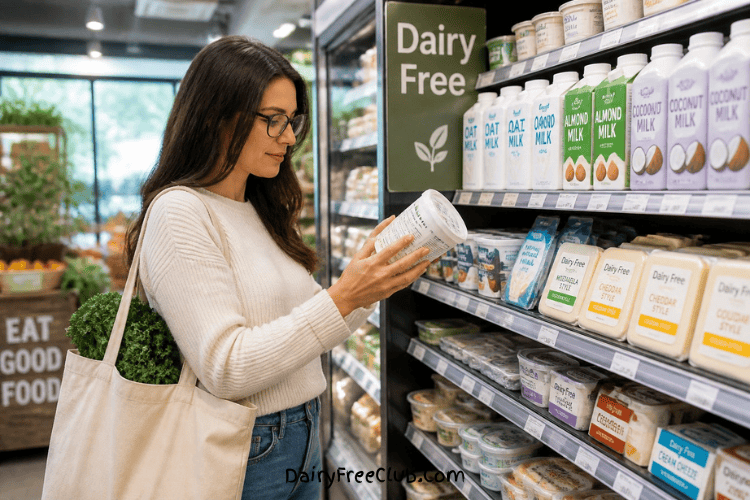
Smart shopping strategies can cut your dairy-free grocery costs significantly while keeping your meals interesting and nutritious. Once I started planning ahead and paying attention to where I shopped, I noticed a real difference in my weekly grocery bill. Focus on planning your meals ahead, buying produce at the right time, and knowing which stores offer the best deals on dairy-free basics.
Planning Ahead with Meal Prep
Planning your meals before you shop stops you from buying random items that end up wasted in the back of your fridge. Spend 15 minutes each week writing down what you’ll eat for breakfast, lunch, and dinner.
Check your pantry first to see what dairy-free staples you already have on hand. Rice, beans, oats, and lentils are cheap building blocks for dozens of meals and they’re probably already sitting in your cupboard.
Cook larger batches of food on weekends and freeze portions for busy weekdays. A big pot of dairy-free chili or vegetable soup costs just a few dollars and gives you four to six ready-made meals. This approach reduces food waste and saves you from ordering expensive takeout when you’re too tired to cook.
Make a shopping list based on your meal plan and stick to it at the store. Your list should focus on ingredients that pull double duty and work in multiple recipes throughout the week.
Scoring Deals on Seasonal and Frozen Produce
Seasonal produce costs 30-50% less than out-of-season options and honestly tastes better too. For instance, you can buy strawberries in summer, squash in fall, and citrus in winter for the best prices and the best flavor.
Frozen vegetables and frozen fruits are just as nutritious as fresh ones and often cheaper per serving. A bag of frozen broccoli costs about $1 and lasts months in your freezer without any risk of spoilage.
You can also stock up during sales and freeze extras yourself when you find a great deal. Bell peppers, onions, and berries all freeze well when chopped and stored in airtight bags or containers.
Farmers markets often drop their prices near closing time on weekends. If you can time your visit for that last hour before vendors pack up, you can score some genuinely great deals on fresh produce.
Store brands cost 20-40% less than name brands and taste just as good in most cases. Most grocery chains now carry dairy-free alternatives like plant milk, yogurt, and even cheese under their own store labels.
Discount stores like Aldi carry surprisingly good dairy-free options at prices that are hard to beat. You’ll find basics like canned beans, rice, pasta, and dairy-free milk for noticeably less than you’d pay at traditional grocery stores.
Warehouse stores work well for buying in bulk if you have the storage space at home. Large bags of oats, rice, and frozen vegetables add up to real savings over time. You can split bulk purchases with a friend if the quantities feel too large for your household.
Compare unit prices on shelf tags rather than just looking at the overall package price. A larger container isn’t always cheaper per ounce, so take a second to check the math before assuming bigger always means better value.
Building an Affordable Dairy-Free Pantry
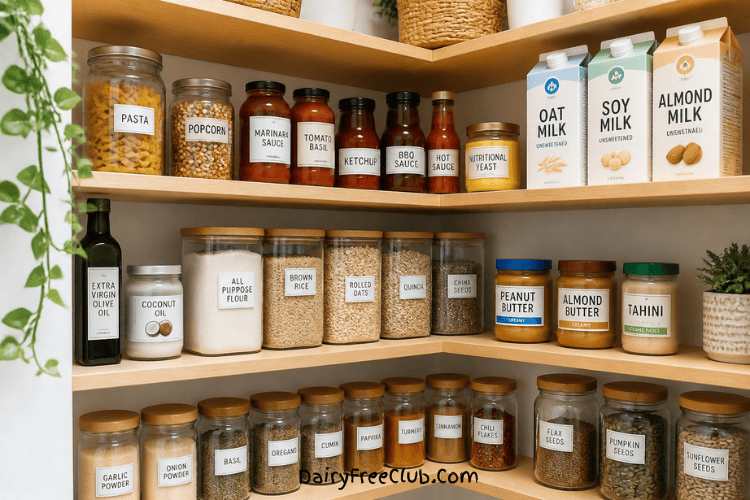
A well-stocked pantry makes dairy-free eating easier and cheaper because you’ll always have the basics ready when you need them. Once I built up my pantry properly, I stopped making those expensive last-minute trips to the store. Focus on versatile staples that work in multiple recipes, buy shelf-stable items in bulk when prices drop, and keep ingredients on hand that let you cook large batches to save both time and money.
Essential Dairy-Free Staples
Your dairy-free pantry needs a few key items that replace traditional dairy and add real flavor to your meals. Nutritional yeast is one of the most useful staples you can buy. It costs around $8-12 per pound and adds a cheesy, savory flavor to pasta, popcorn, and sauces that honestly surprised me the first time I tried it.
Plant-based milk is another must-have for your pantry. Buy shelf-stable cartons in bulk when they go on sale. Oat milk and soy milk are usually the cheapest options at $2-4 per carton, and store-brand versions work just as well as name brands for a lower price.
Keep cooking oils like olive oil and coconut oil stocked in your pantry at all times. Coconut oil works great as a butter substitute in baking without any noticeable difference in most recipes. You’ll also want basics like the ones I mentioned previously, such as flour, rice, pasta, oats, and dried spices that last months and form the base of countless budget-friendly meals.
Stock nut butters and seeds for protein and healthy fats throughout the week. Peanut butter is the cheapest and most versatile option, but sunflower seed butter works well if you’re dealing with nut allergies.
Smart Use of Canned and Dried Goods
Canned tomatoes are great for cheap dairy-free cooking that tastes like you spent real effort. A 28-ounce can costs less than $2 and makes the base for pasta sauces, soups, and stews that feel hearty and satisfying. Buy store brands to save even more without sacrificing flavor.
Dried beans cost pennies per serving and last for years tucked away in your pantry. A one-pound bag makes 6-8 servings and costs around $1-2 total. Black beans, chickpeas, and lentils are the most versatile options you can keep on hand.
I try not to use canned beans, but it can save you time when you’re in a rush and don’t have the patience for soaking. They cost more than dried but still stay budget-friendly at $0.80-1.50 per can. I keep both dried and canned versions in my pantry so I always have options depending on how much time I have.
Frozen vegetables belong in every dairy-free kitchen without question. They’re just as nutritious as fresh, cost less, and won’t spoil before you get around to using them. Buy large bags of mixed vegetables, broccoli, and spinach when they go on sale and add them to any meal for easy nutrition.
Stocking Up on Batch-Friendly Ingredients
Batch cooking saves you real money because you’re using your time and energy efficiently across the whole week. Stock ingredients that work well in large recipes you can freeze in portions and reheat on busy nights.
Buying in bulk makes the most sense for items you reach for regularly. Again, as mentioned previously, dry goods like rice, oats, flour, and pasta cost 30-50% less when you buy larger quantities and store them properly in airtight containers.
Focus on ingredients that freeze well after cooking since that’s where batch cooking really pays off. Cooked beans, grains, soups, and sauces all freeze perfectly for 3-4 months. Make a big batch of tomato sauce, bean chili, or vegetable soup on the weekend, then portion it out for quick and easy weeknight meals.
Buy versatile ingredients that earn their place in multiple dishes throughout the week. Chickpeas can become hummus, curry, salads, or roasted snacks depending on your mood. When you choose flexible ingredients like these, nothing goes to waste and your grocery dollar stretches a whole lot further.
Homemade Dairy-Free Basics That Save Money
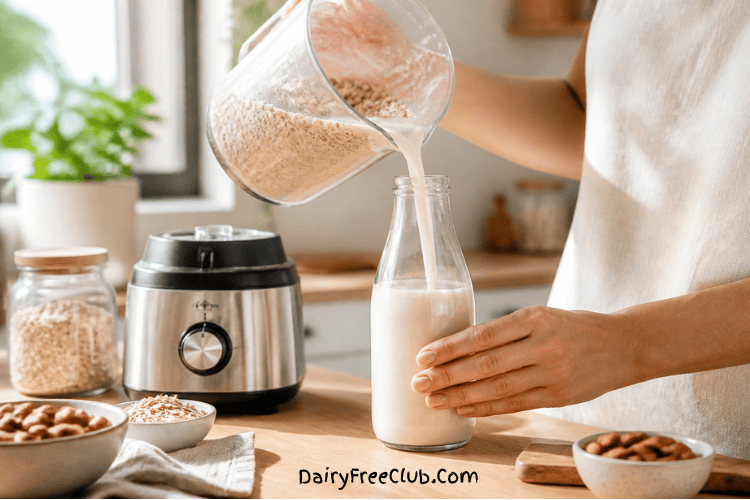
Making your own dairy-free staples costs a fraction of what you’d pay at the store, and it’s honestly easier than it sounds. A carton of store-bought almond milk runs $3-5, but you can make it at home for about $1 using a handful of almonds and water. I was skeptical at first, but now I’ll never go back.
How to Make Plant-Based Milks at Home
You can make plant-based milk in less than five minutes with just two ingredients in your blender. All you need is your base — almonds, oats, cashews, or even sunflower seeds — and plain water.
Soak one cup of nuts or seeds for 4-8 hours, then blend with four cups of water. Strain through a nut milk bag or a clean dish towel and you’re completely done. For oat milk, skip the soaking step and blend immediately, but make sure to use cold water to avoid a slimy texture.
One pound of raw almonds costs around $8 and makes six to eight full batches of milk. That works out to less than $1.50 per batch compared to $4 or more at the store for a name-brand carton.
Store your homemade dairy-free milk in the fridge for up to five days in a sealed jar. Add a pinch of salt and a soaked date for natural sweetness if you like it flavored. Save the leftover pulp for smoothies, baked goods, or oatmeal so nothing goes to waste.
DIY Dairy-Free Cheese and Yogurt
Cashews transform into surprisingly creamy dairy-free cheese with very little effort once you try it. Blend soaked cashews with lemon juice, nutritional yeast, garlic, and salt for a spreadable cheese that costs about $2 per batch. Store-bought versions of the same thing often cost $6-8 for a smaller amount.
For dairy-free yogurt, you need canned coconut milk and a couple of probiotic capsules from any drugstore. Mix full-fat coconut milk with the contents of two probiotic capsules, then let it sit in a warm spot for 12-24 hours. The result is tangy and creamy in a way that genuinely surprised me the first time I made it.
Nutritional yeast adds that cheesy depth to homemade dairy-free recipes for just pennies per serving. A large container costs around $10 but lasts for months of regular use, making it one of the best investments in your dairy-free pantry.
Versatile Homemade Sauces and Spreads
Basic pantry ingredients can create rich, creamy sauces without a single drop of dairy. Blend soaked cashews with water, garlic, and spices for an alfredo-style sauce that costs under $1.50 per batch. The same base works for ranch dressing, sour cream, or cream cheese just by adjusting the liquid ratio and seasonings.
Tahini mixed with lemon juice and water makes an instant creamy dressing for about 50 cents per serving. Add garlic, fresh herbs, or a little maple syrup to completely change the flavor profile depending on what you’re making.
Keep a few of these homemade basics in your fridge and you’ll always have what you need for dairy-free cooking throughout the week. They stay fresh for 2-3 days refrigerated and cost 60-75% less than buying pre-made versions from the store.
Frequently Asked Questions
Most people have very similar questions when they start cutting dairy costs, from navigating social situations to understanding nutrition on a tight budget. The answers below address some of the less obvious challenges that don’t always come up in standard dairy-free guides.
Is eating dairy-free actually cheaper in the long run?
It depends entirely on how you approach it. If you rely heavily on specialty products like vegan cheese, dairy-free ice cream, and packaged plant-based snacks, your grocery bill will almost certainly go up. But if you build your diet around whole foods like beans, lentils, rice, oats, and seasonal vegetables, you’ll spend less than you did before going dairy-free.
The transition period tends to be the most expensive phase because you’re experimenting with new products and haven’t yet figured out what works for you. Give yourself 4-6 weeks to find your rhythm before deciding whether it’s costing you more.
This is one of the trickiest parts of dairy-free living that doesn’t get talked about enough. The easiest strategy is to bring a dish you know you can eat and that others will genuinely enjoy too. A good hummus and vegetable platter, a bean dip, or a fruit salad costs very little and fits into almost any gathering naturally.
For family dinners where you can’t control the menu, eat a small meal before you go so you’re not arriving hungry and stressed. That way you can enjoy whatever dairy-free options happen to be available without feeling deprived or difficult.
Will I get enough calcium and vitamin D without dairy products?
Calcium is genuinely easy to get from non-dairy sources, but vitamin D is where most people quietly fall short regardless of whether they eat dairy or not. Dark leafy greens like kale and bok choy, canned white beans, almonds, and fortified plant milks all provide meaningful calcium per serving.
For vitamin D, look for fortified oat or soy milk since many brands now add it during production. Spending time outdoors helps your body produce vitamin D naturally, and a basic supplement costs around $5-8 for a three month supply at any drugstore, which is the most reliable and affordable solution for most people.
Dairy hides in places most people never think to check. Bread, crackers, processed deli meats, canned soups, salad dressings, and even some potato chips contain milk derivatives like whey, casein, or lactose. Always check ingredient labels for these words rather than just looking for the word “milk.”
Restaurant meals are trickier since butter is frequently used to finish sauces, cook eggs, and toast bread even when a dish looks completely dairy-free on the menu. So, alway ask the waitress if there any butter or cream in the dish you want to order — it will save you a lot of guesswork and discomfort.
What are the best dairy-free swaps for baking on a budget?
Baking is where a lot of people get stuck because dairy seems built into so many recipes. The good news is that most baked goods work perfectly with simple swaps that cost very little. Replace one cup of milk with one cup of oat milk or even water in most recipes without any noticeable difference in the final result.
For butter, use the same amount of refined coconut oil or a neutral vegetable oil depending on whether the recipe needs a solid or liquid fat. Buttermilk is easy to replicate by adding one tablespoon of white vinegar or lemon juice to a cup of plant milk and letting it sit for five minutes before using. These swaps cost pennies and work reliably across cookies, muffins, pancakes, and quick breads.
Read also:

I’m Simone, and I’m here to make your dairy-free journey simple, enjoyable, and delicious! Whether you’re lactose intolerant, have a dairy allergy, or are exploring a plant-based lifestyle, Dairy Free Club is your go-to resource for finding the best dairy-free alternatives.
Join me as we uncover the tastiest dairy-free products, easy meal ideas, and expert tips to help you navigate a dairy-free lifestyle with confidence.